


Home Battery Storage Without Solar: Our Bills and Payback - On an EV Tariff
A £54 monthly electricity bill, including charging our electric car.* That is one of the results we have seen since adding a home battery to our off-peak electricity tariff — without any solar panels and saving nearly £100 per month.
I am Simon from EV Electrical. We commissioned our home battery on 30 March 2026: a Canadian Solar EP Cube with three 5kWh batteries and a 5kW hybrid inverter. The battery stores cheaper overnight electricity and supplies most of our needs in the house during the day.
We have an EV charger - and so could take advantage of an energy saving tariff - in our case - Octopus Intelligent Go- although there are many others available that would do the same thing.

What does our electricity actually cost?
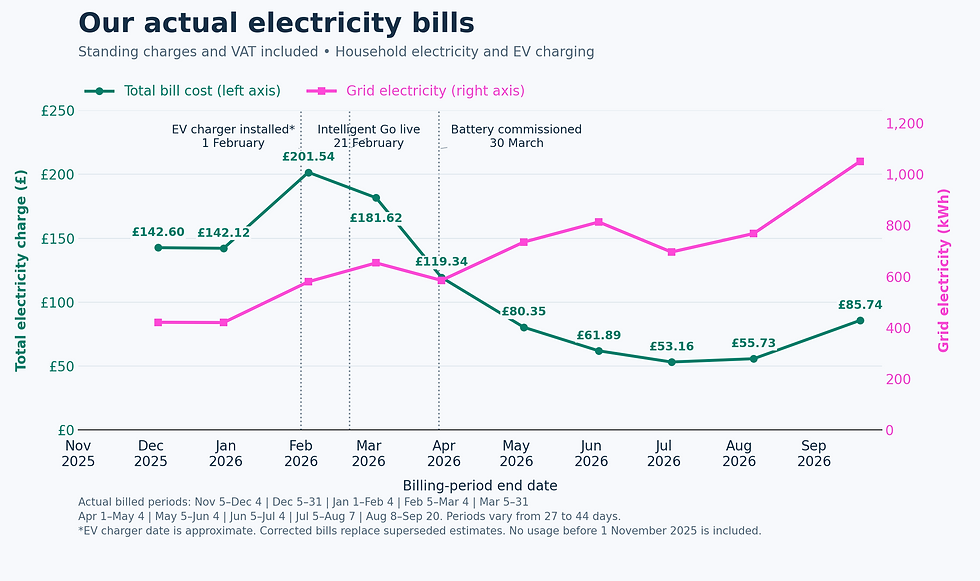
Our bills tell the story. The electricity charge was £201.54 for 1 January–4 February and £181.62 for 5 February–4 March. Later bills were £61.89, £53.16 and £55.73 for the periods shown below. These totals include standing charges, VAT and EV charging.*
Electricity billing period | Total cost* | Grid electricity |
1 January–4 February 2026 | £201.54 | 579.8kWh |
5 February–4 March 2026 | £181.62 | 653.4kWh |
5 May–4 June 2026 | £61.89 | 813.4kWh |
5 June–4 July 2026 | £53.16 | 696.0kWh |
5 July–7 August 2026 | £55.73 | 768.4kWh |
Charge overnight, power the home during the day
The battery charges between 23:30 and 05:30, from a minimum setting of 5% towards a target of 100%. Once the cheaper period ends, we use that stored electricity around the house.
In July, approximately 95% of the electricity we bought from the grid was bought at the cheaper rate. Average peak-rate imports fell from 9.88kWh a day before the battery to 1.13kWh a day in July.*
Heating and hot water use other energy sources and do not significantly affect our electricity use.
The three changes shown on the graph
We first installed an EV charger around 1 February 2026. An Ohme ePod replaced it on 14 February, and Intelligent Octopus Go went live on 21 February. The home battery was commissioned on 30 March. The dotted lines mark the first charger, the tariff going live and the battery commissioning.*
£5,995 supplied and fitted: projected payback
Using a supplied-and-fitted price of £5,995, the annualised reduction in our observed electricity bills is approximately £1,097 — equivalent to about £91 a month. That gives an illustrative simple payback of around 5.5 years.**
The battery now works automatically as part of our daily routine: charging overnight and supplying the house while grid electricity is more expensive.
Could a home battery work for you?
You do not need solar panels to explore battery storage. EV Electrical can review your tariff, electricity use and property, then recommend a suitable installation.
* Actual billed periods are shown rather than calendar months; they differ in length. Corrected bills replace superseded estimates. The £53.16 bill covers 5 June–4 July 2026 and includes the home, EV, standing charges and VAT. The first charger date is approximate. Building works increased daytime demand for 5–6 weeks from 1 May; occasional missed battery charges also affected peak imports. No pre-1 November 2025 usage is included.
** Projection: pre-battery Intelligent Go charges of approximately £174.01 over 37 days (21 February–29 March), compared with £100.19 over 59 days (5 June–2 August), give an annualised difference of (£174.01 ÷ 37 − £100.19 ÷ 59) × 365 ≈ £1,097. £5,995 ÷ £1,097 ≈ 5.5 years. This total-bill comparison includes tariff-rate and EV-use changes; it is not an isolated battery-only saving or guaranteed annual return. It assumes the difference continues and excludes financing, maintenance and degradation. The case-study EP Cube differs from the Anker package currently offered.


Comments